
Before the dawn of the little understood holiday we celebrate each September, Canadian workers were growing more restless and angry with each passing day. It was 1872 and Toronto was abuzz with demonstrations demanding the release of local labor union workers who were imprisoned for striking. Their cause? A nine-hour working day. At the time, unions were still illegal and striking was viewed with skepticism as a crime undertaken to disrupt trade. Factory laborers endured low pay for arduous work 12 hours a day, seven days a week. They were forced to work when they were sick and grew tired of seeing children hurt in dangerous factories.
Meanwhile, in America, industry was steaming forward and social change was sweeping the nation. That year, the first patent was issued by the U.S. Patent Office, Yellowstone was officially declared our first national park, Susan B. Anthony cast her vote in defiance of the law and Ulysses Grant was re-elected president for a second term after defeating a challenger who died just weeks after the election.
American workers, faced with many of the same issues as Canadians workers, followed the example of their neighbors to the north and organized a march.
It was a Tuesday in September 1882 and organizers from New York Central Labor Union held their breaths. They knew their cause was just and their arguments strong, they just didn’t know if anyone would show up. Would anyone opt to endure a day without pay and risk being fired?
They didn’t know, so they wondered and waited.
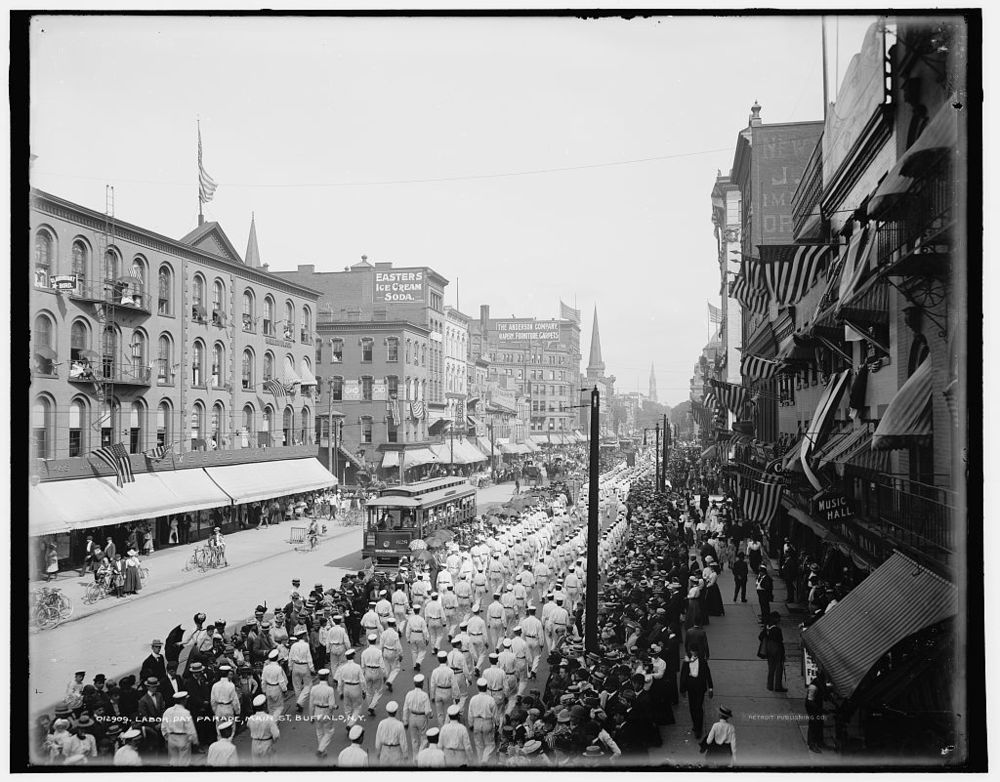
But show up they did – some 10,000 people marched in the nation’s first Labor Day parade that year. They marched past city hall, Union Square and then uptown to 42nd Street. To add an element of celebration, organizers ended the march with a picnic, a concert and rousing speeches, laying the groundwork for how we celebrate today.
Twelve years later – and just days after a bloody clash between the government and workers killed dozens– President Grover Cleveland signed legislation to appease angry labor unions and declared Labor Day a national holiday.
All the marches, legislative recognition and public awareness began to pay off as laws began to change and a shorter workday and better working conditions became the norm.
Fast forward to 2015.
Many would argue that while an eight-hour workday is still the official standard, many of us are expected to work 10-12 hour days and still be “on” the other 12. The world is at once smaller and more global than it has ever been. Many of us take calls at all hours from across and country, maybe even from far-flung places like China and Brazil. Computers and the speed of modern communication are largely to blame or praise for these changes, depending on your perspective.
As I reflect on our present and our past, I realize that Labor Day should fundamentally be a time of gratitude for those who fought for the rights we enjoy. They not only spoke up for an eight-hour day, but they also paved the way for increasingly flexible schedules that allow for telework and compressed time. Factory workers would not have dared dream of such a thing 100 years ago! Maybe it’s a time to take stock not only of what we have, but how our cultural attitudes toward work should evolve with the times.
Labor Day should also serve as a reminder that business – even in this modern age – cannot be driven solely by computers. The human touch is still what drives us and what keeps us connected. We all have to continue to fight for our relationships and meet in person with our clients, colleagues and contacts when we can.
There is no substitute for human connection. And that’s something that was as true in 1872 as it is today. That’s something that will never change.
What’s the lesson for you?
By Blair Koch


