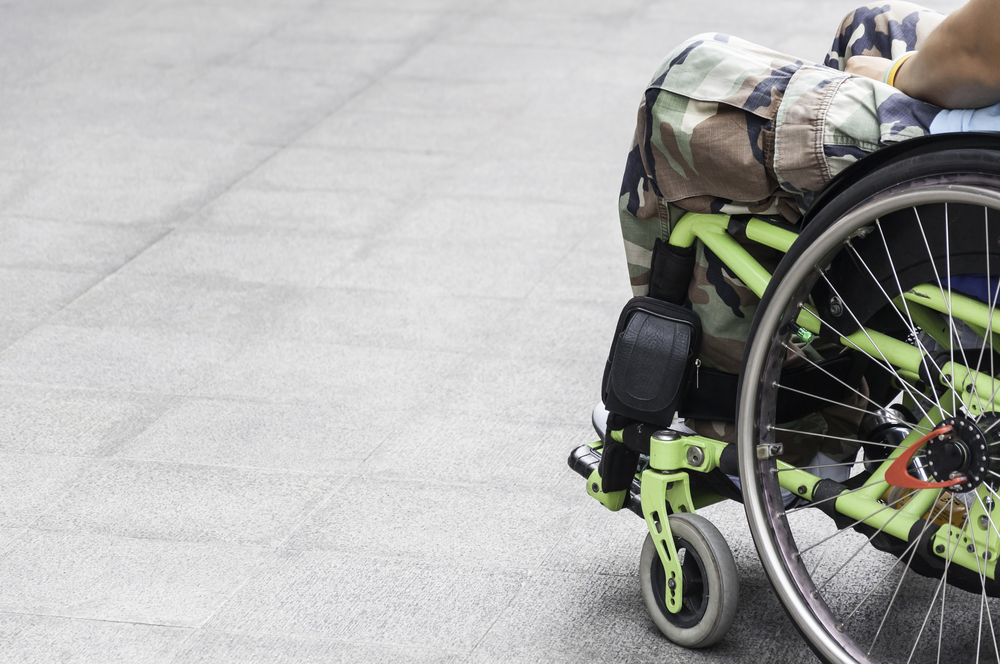
Image courtesy of Pixabay.com
For this special Veterans Day edition of Business with Blair, we bring you Sheridan Walker. Sheridan is the founder and CEO of HirePotential, Inc. as well as someone I admire very much. At HirePotential, Sheridan works with companies to recruit, hire and retain people with disabilities.
So, without further adieu…
Tell me about what you do. How does your business work?
I do a variety of work in disability compliance and inclusion for government contractors of all sizes. Most of our work is with mid and large size companies for the most part.
We offer six types of services:
- Training, which is anywhere from onsite, webinars to e-learning courses.
- Accommodation implementation, we’ll set up someone with a disability so they can do their job. For example, we assist in an employee who may be blind with their assistive technology they use to do their job. B. Applicant Accommodation Call Center Support Service- Accommodation assistance for a company’s process. We assist applicant to apply to a job if the company’s website is not accessible which most are not. C. IT help desk support for assisted technology users within a company.
- Website accessibility testing and implementation, where we test a company’s website against the accessibility global standards to ensure that most users can access their site for purchases or apply for a job without barriers. Most websites are not access to people with disabilities. We also do remediation, where we help make PDF’s, applications and their materials accessible.
- Tax Credit administration. There are several incentives companies can capture in hiring people and veteran with disabilities. There are several other targeted groups as well. We assist companies with administrating the tax credits.
- Outsourced recruiting.
- Consulting.
How big are the populations of the people you work with? Tell me a bit about them and what they have in common.
The disability population includes people with disabilities, our aging workforce and veteran/military. There are 56+ million people with disabilities, 23.9million veterans and 70 million over the age of 55. This is what we call the untapped workforce. All of these populations may have a disability or limitation. Between 73-80percent have hidden disabilities. Only 20percent have an obvious disability.
What got you interested in pursuing a business like this? What was your inspiration?
My first career was as a therapeutic recreational therapist. I worked with spinal cord, brain injury, stroke and other neuro type injuries. My job was to reintegrate my patients back into the community after their injury. After they would be discharged, I always wondered what happened after they left the hospital. Did they go back to work? Did they get a job? What happened with their employment? After several years in healthcare, I went into corporate America. At that time there were more jobs than people in IT. I knew there were a lot of qualified applicants with disabilities, an untapped market. I provide a business plan to an IT management and staffing company and they gave me a three month contract. In the first two months we hired 40 people and they hired me full time to create a new recruiting program within the company. In my first year, we hired 186 people, drove seven million dollars in revenue and a quarter of a million dollars in tax credits. I knew I had a viable model and that’s how HirePotential, Inc. was born in 1999.
What’s the best part of your job?
I love working with clients and seeing the end result. Every client is at a different point in the learning curve. So when I can work with a company as a partner, helping them be successful, I love that.
What is the most challenging aspect of your job?
The challenge is that companies really struggle with hiring people with disabilities because there is negative image around disability – even the word has a negative connotation. We have to get better and understand someone’s ability, rather than their disability. The education process can be very taxing and frustrating. It’s a challenge to get them to see the value and business opportunity within this untapped market.
Are the attitudes toward veterans different than those that have acquired their disability in a different way? What are the biggest barriers in finding veterans employment?
That’s interesting. I will tell you that people are much more accepting and willing to hire when it’s a veteran who has put their life on the line for our freedom – they can look past their disability. If they have a disability and they aren’t a veteran, they tend to be more reluctant. There are a lot of myths, fears and assumptions around disability. Many hiring managers don’t think of abilities of people with disabilities. Attitude barriers are the number one reason why people with disabilities do not get hired – it has nothing to do with their skills and abilities. For veterans with disabilities, I think companies need to do a better job at the transition piece by providing more support. Transitioning into civilian life is really tough and they need to have support systems at the job site they can access easily. Suggestions would be a veteran support group, one on one support, or a networking group for employees who are veterans.
Are there incentives/tax breaks available for employers who want to hire veterans and the untapped? Particularly for small businesses?
Yes, there are up to $9,600 in federal tax credits available. There are 26 targeted groups that qualify veterans and people with disabilities are two from this group – and that’s just for one hire. Only one out of 800 businesses knows of this program or takes advantage of these incentives. Many CPA’s do not know much about this either, so they’re missing out on billions of dollars that can offset the companies tax liabilities. HirePotential does the administration for companies who hire 100 people or more per year to assist in a seamless process and collection of tax credits.
What are the intangible benefits of hiring veterans and people with disabilities? What do you want people to know.
Retention and loyalty without a doubt. It is in my experience has an employer that we have the highest retention rate than other recruiting streams and I also had the highest number of clients asking to hire my employees.
What kind of skills do veterans and people with disabilities often have that could benefit small businesses?
That’s hard one. They all have different skills just like anyone looking for a job. It’s translating the military language in to civilian jobs. Small businesses can benefit from hiring people and veterans with disabilities. It’s a untapped market of qualified talent. Plus, there ae many incentives companies can capture such as the tax credit or On The Job Training. For small business, retention is huge and this population is very loyal and motivated – they just need to be given a chance. I do want to emphasize that this is a business decision, not a charity decision. It’s solely a business decision to tap into a viable, untapped talented market.
What would you say to employers who might be concerned that someone with a disability wouldn’t be able to reliably perform their duties?
Don’t make assumptions. We all have skills and abilities. We may just do it differently. We all have limitation and we all compensate for it. For example, I’m a horrible speller, so I use spell check. This is my accommodation. We all have limitations whether we call it a disability or not. There is no barrier to disability. The only barrier is attitude. There are so many products and tools to accommodate. Everyone has skills and abilities and deserves a chance. I’d also like business owners to realize that this population really does want to work. A job equals freedom. Currently the unemployment rate is double for people with disabilities. This is not because they do not have skills and abilities it is because of the attitudinal barriers, not ability.
Thanks for your insights Sheridan!


